When the Voice Judging You Is Actually Judging Your Body
TL;DR: If you've ever noticed that your harshest self-judgment shows up specifically about your body - your stomach, your weight, what you ate, how you look in photos - this post is the more specific follow-up to "How to Stop Judging Yourself." It breaks down why body-criticism is often sharper and more relentless than other kinds of self-judgment, where it actually comes from, and why "just love your body" advice doesn't work. It also covers what genuinely helps: understanding the part of you doing the criticizing, not silencing it.
A while back I wrote about the general shape of self-criticism - the inner critic that shows up around your choices, your productivity, the way you handle relationships. If you haven't read that one, start there - a lot of what's in this post builds on it.
But I hear from clients constantly that their self-judgment isn't evenly distributed. It doesn't show up the same way about a work mistake as it does about their body. The voice around their body (and its flaws) tends to be louder, sharper, and a lot harder to talk yourself out of. You can logic your way out of "I'm bad at my job" a lot more easily than you can logic your way out of "I hate how I look." So let's talk about why that specific version of the inner critic hits differently - and what actually can help when it does.
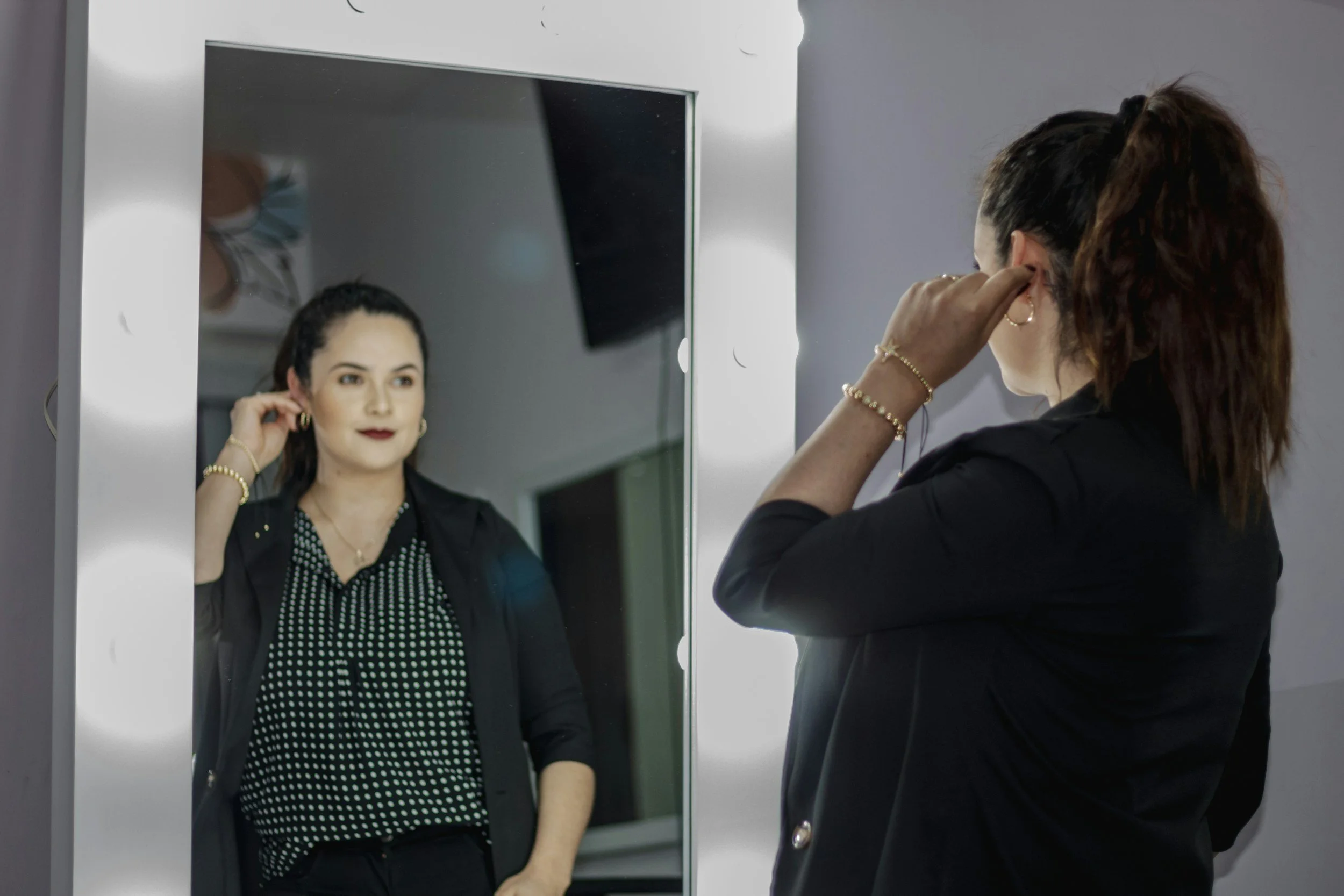
Why Body Criticism Often Feels Different From Other Self-Judgment
Most self-criticism makes some kind of sense, even when it's not fair to you. "I should have caught that mistake" is at least about something you actually did. Body-criticism is different. It's not really about anything you “did” - it's about how you exist, how you take up space, how you look in a photo you didn't even pose for. That makes it feel less like a thought and more like a fact.
It also usually starts earlier than other kinds of self-judgment. Many people can't remember a time before they were aware of their body being watched, measured, or commented on, whether it was by family, by doctors, by classmates, or just generally by the world around them. That's a lot of time for a critical voice to build its case.
And unlike criticism about a mistake, body-criticism rarely gets resolved. You can fix a mistake and move on, and increase your confidence in your capabilities. There's no finish line for a body. So, the voice just keeps talking. Not because you're doing something wrong - but because no one ever gave it a stopping point.
This Voice Didn’t Just Come From Nowhere
If you traced your general self-criticism back to its roots (like we talked about in the original post) you probably noticed it came from somewhere. The same is true here, usually even more clearly.
Body-criticism almost always comes from messages you got from family, the world around you, or diet culture, and often all three at once. A parent who dieted in front of you. A doctor who mentioned your weight before anything else. Comments at school. Every ad, every magazine, and now every app quietly saying the same thing: your body is a problem to fix (and really the ONLY problem that is worth focusing on).
None of that means something is wrong with you for picking up on it. It means you were paying attention to the world around you, the way people naturally do. The critical voice about your body isn't a flaw in you - it's a learned response to a culture that's been sending this message your whole life, from more directions than almost any other kind of self-judgment.
The Part of You That's Doing This Thinks It's Protecting You
This is the part that surprises people most, and it's central to how I work. The part of you that criticizes your body isn't trying to hurt you, even though it feels bad. In IFS (Internal Family Systems Therapy, or “parts work.”) terms, this is usually a protector - a part that learned a long time ago that judging your body first felt safer than being caught off guard by someone else's judgment.
If you criticize yourself before anyone else can, it can feel like you're ready for it. If you stay on high alert about your body, some part of you believes that alertness might finally earn you safety, acceptance, or love. It's tiring work, and it often isn’t actually helpful - but it makes sense once you see what it's trying to do for you.
That matters, because most people try to fight this part of themselves head-on. They try to silence it, argue with it, or drown it out with forced positivity. That rarely works for long, because you're not arguing with a fact. You're talking to a scared, tired part of you that genuinely believes it's keeping you safe.
Why "Just Love Your Body" Doesn't Actually Work
I want to say this directly, because it's some of the most common (and most frustrating) advice people get. "Just love your body" treats body-criticism like a switch you can flip if you just try hard enough. If it were that simple, you'd have already done it (you and me both!).
Forcing positive body talk when a protective part of you is struggling usually backfires. It can make that part push back even harder, because now it also has to defend itself against being told it's wrong for trying to protect you. Real change doesn't come from drowning the critical voice out. It comes from understanding what it's doing, and slowly showing it, through real experience, not just affirmations, that it doesn't have to work this hard anymore.
That's not something you fix in a weekend. It's not even something you finish. It's ongoing work, and some days the critical voice will still be loud, no matter how much progress you've made. That's not a failure. That's what having a body in this culture is like, even years into healing.
If you recognize this pattern: a body-criticism voice that's louder and harder to shake than anything else in your head - this is exactly the kind of work we do together in session. Book a free consult and let's start understanding what that part of you actually needs.
What Actually Helps
A few things that genuinely help, based on what I see with clients:
Notice when it's about your body, not you
Start separating "I'm criticizing my choices" from "I'm criticizing my body." They often get tangled together, but they usually need different kinds of attention.
Get curious about when it started, not just what it's saying
Instead of arguing with the content ("my stomach isn't actually that big"), ask when this voice first showed up and what it was reacting to. That's usually more helpful than debating whether the thought is true.
Ask what it's afraid will happen if it stops
Most protective parts are guarding against something specific — rejection, feeling unsafe, feeling unlovable. Naming that fear out loud, even just to yourself, takes away some of its power.
Let go of the idea that the goal is silence
The goal isn't to never hear this voice again. It's to change your relationship with it — to notice it, understand it, and not let it run the show, even on the loud days.
You Don't Have to Carry This Alone
If you've read this far, some part of you probably recognizes this pattern - the voice that shows up about your body faster and harder than it does about almost anything else. That's not a character flaw. It's a part of you that's been working overtime for a long time, trying to keep you safe the only way it knew how.
Here's the thing about that part: it doesn't need to be silenced. It needs to be understood. And that's genuinely hard to do by yourself, because it learned to work alone — quietly, constantly, in the background of your day. It often takes another person in the room to help it finally put some of that work down.
You don't have to have this figured out before you reach out. You don't need the perfect words for what you're feeling, or a clear plan for what needs to change. You just need to be ready to stop doing this by yourself.
If any of this sounds familiar, I'd love to help you understand what that part of you actually needs. Reach out and let’s connect!

Author Bio
Keri Baker, LCSW, is a licensed clinical social worker who helps highly sensitive adults - especially folks in larger bodies - build a real relationship with their bodies and unlearn the criticism diet culture handed them. She's a Certified Intuitive Eating Counselor, trained in IFS and Brainspotting, and sees clients in person at her office in the Carrollwood area of North Tampa, and virtually throughout Florida, Vermont, and North Carolina.
Therapy in Tampa, FL
Services are also offered virtually throughout Florida, North Carolina and Vermont